Boxster
The car that saved the company
In the early 1990s, Porsche was on the brink of bankruptcy. With the entire lineup wavering apart from the 911, the Boxster — reviving the spirit of the 1953 550 Spyder in mid-engine form — saved the company alongside the 996 Carrera.
Twenty-five years of staying true
Through years of being dismissed as "the girlfriend's car", the Boxster held onto the essentials of a true sports car for a quarter century: 50:50 weight distribution and a naturally aspirated flat-six.
A fanbase that pulled the lineup back
After downsizing to a four-cylinder turbo in 2016, criticism over the soundtrack grew loud. In 2019, the Spyder and GT4 brought back the naturally aspirated flat-six; by 2020, the GTS 4.0 had completed the market's reversal of the lineup.
The last petrol mid-engine
In October 2025, the final petrol mid-engine roadster rolled off the Stuttgart line. The Boxster's spirit now carries on as an EV.
The car that saved the company. In the early 1990s, Porsche was on the brink of bankruptcy. With the entire lineup wavering apart from the 911, the Boxster — reviving the spirit of the 1953 550 Spyder in mid-engine form — saved the company alongside the 996 Carrera. Twenty-five years of staying true. Through years of being dismissed as "the girlfriend's car", the Boxster held onto the essentials of a true sports car for a quarter century: 50:50 weight distribution and a naturally aspirated flat-six. A fanbase that pulled the lineup back. After downsizing to a four-cylinder turbo in 2016, criticism over the soundtrack grew loud. In 2019, the Spyder and GT4 brought back the naturally aspirated flat-six; by 2020, the GTS 4.0 had completed the market's reversal of the lineup. The last petrol mid-engine. In October 2025, the final petrol mid-engine roadster rolled off the Stuttgart line. The Boxster's spirit now carries on as an EV.
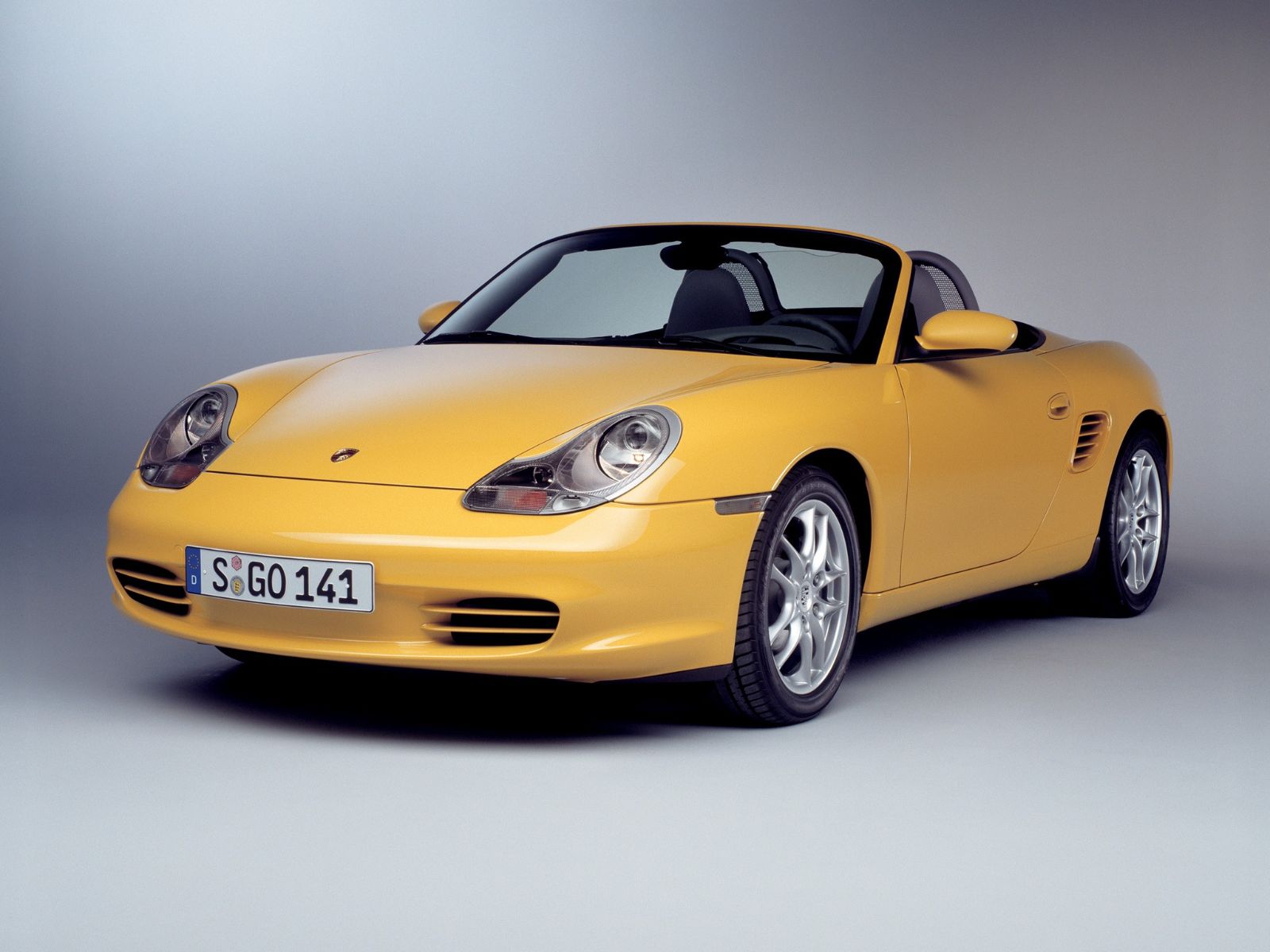
Boxster
September 1996 — the gamble Porsche made on the brink of bankruptcy. Grant Larson dragged the mid-engine spirit of the 1953 550 Spyder into the modern era. Sharing parts with the 996 Carrera was the decisive call: 'this isn't a real Porsche' and 'this saved Porsche' coexisted, but four years later cumulative 100,000 sales had returned the company to profit.
- MilestonePilot production begins in StuttgartPilot production at the Zuffenhausen plant in late 1995, just before full-volume production took off in mid-1996. The result of two and a half years of design freeze and 968-bodied prototype testing after the 1993 concept reveal.Wikipedia (986) ↗
- Launch1st-gen 986 launch — the car that saved a companyParis Auto Show debut, September 1996. A mid-engine roadster built down to a price by sharing parts with the 996 Carrera. M96 2.5L flat-six naturally aspirated, 204 PS, 5-speed manual or Tiptronic. 8,000 units in the first year flipped Porsche back into the black — the payoff of swallowing pride and accepting Toyota consulting plus shared parts.Wikipedia (986) ↗
- RecallM96 cracked-liner crisis — casting process redesignedEarly M96 engines suffered porous engine blocks and cracked or slipping cylinder liners. Porsche's fix bored out the defective liners and pressed in new ones, while a redesigned casting process from late 1999 solved the problem at source. The Boxster's first reliability crisis, and its resolution.Wikipedia (986) ↗
- F/L986 mid-cycle — the lineup finds its shapeBase engine grew 2.5 → 2.7L (220 PS), Boxster S added with a 3.2L (250 PS). The price gap to the 911 Carrera narrowed and the Boxster expanded from a single car into a proper lineup. The 'entry Porsche' positioning settled into Korean buyers' minds at this point too.Wikipedia (986) ↗
- F/L986 facelift — pillar of the companyRefined styling and modest output bumps (2.7 → 225 PS, S → 258 PS). The Boxster was now a load-bearing part of Porsche's P&L — the 'Boxster saves the 911' role hardened into doctrine.Wikipedia (986) ↗
- Milestone550 Spyder Special Edition — channelling Le MansTribute to the 50th anniversary of the 1953 550 Spyder. 1,953 units, GT Silver Metallic monotone with cocoa-brown leather. The first limited-edition Boxster to declare itself an heir to Porsche motorsport heritage rather than just an entry model.Classic Driver ↗
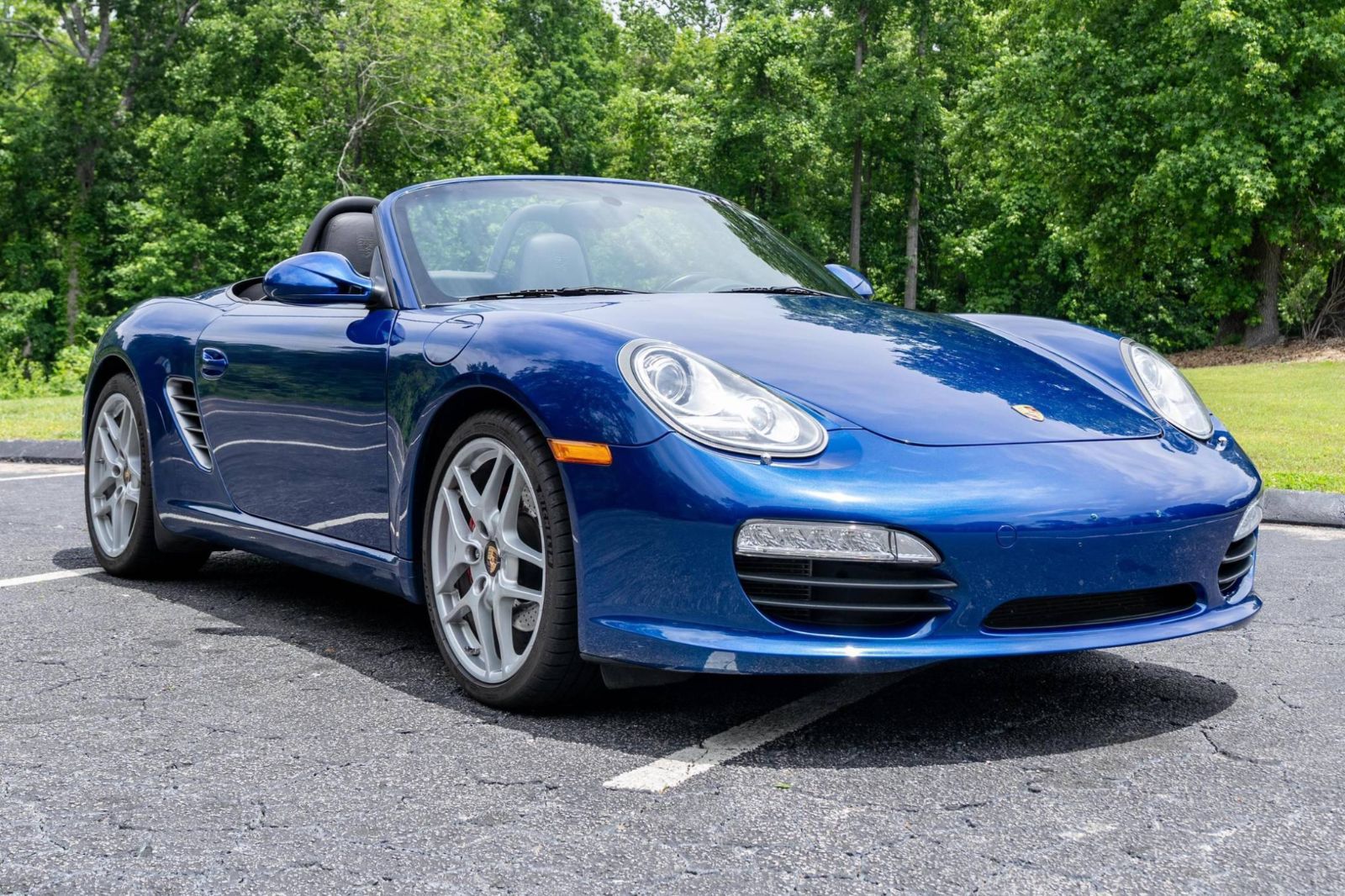
Boxster
The generation in which the Boxster stopped being 'the girlfriend's Porsche' and started being taken seriously as a sports car. Inheriting the Carrera GT's headlamp signature narrowed the visual gap with the 911. The 2007 mid-cycle added VarioCam Plus to the base 2.7L and replaced the S engine with a 3.4L. The 2009 facelift previewed the next generation with PDK 7-speed and direct injection.
- Launch2nd-gen 987 — promoted to a serious sports carThe generation in which the Boxster jumped from 'design exercise' to 'serious sports car.' Inheriting Carrera GT-style headlamps lifted its visual class. Base 2.7L 240 PS / 3.2 S 280 PS. Nineteen-inch wheels were offered for the first time on a Boxster.Wikipedia (987) ↗
- MilestoneCayman joins — one platform, two bodiesNine months after the 987 Boxster, the Cayman (project 987c) — a fastback coupe sharing the mid-engine platform and many parts — joined the lineup. Doors, headlamps, front fenders and most of the interior were shared, expanding the Boxster's mid-engine spirit from 'a single roadster' to 'a roadster-plus-coupe family.'Wikipedia (987) ↗
- F/L987 mid-cycle — equalised with Cayman S outputBase 2.7 → 245 PS (VarioCam Plus added). The S replaced the 3.2L wholesale with a 3.4L for 295 PS — the same output as the Cayman S. Less a facelift than an engine-generation swap.Wikipedia (987) ↗
- MilestoneRS60 Spyder — motorsport heritage carried into the BoxsterTribute to the 1960 12 Hours of Sebring victory. 1,960 units, GT Silver paint with Carrera Red leather. 19-inch SportDesign wheels, Active Suspension Management and a sport exhaust pushed output to 303 PS. The second limited-edition Boxster to inherit Porsche motorsport heritage.Wikipedia (987) ↗
- F/L987 facelift — a new engine ends the M96 eraBase 2.7 → 2.9L 255 PS. The S adopted direct injection (DFI) on the 3.4L for 295 → 310 PS. The PDK 7-speed dual-clutch went into a Boxster for the first time — gearbox and combustion chamber leapt to the next generation simultaneously. The end of the M96/M97 naturally aspirated era.Wikipedia (987) ↗
- MilestoneBoxster Spyder — the purest expressionThe lightest Porsche of its day at 1,275 kg. Aluminium doors, manual canvas top, no AC or audio, carbon bucket seats. 320 PS with a six-speed manual standard, PDK optional. 'The Boxster reduced to the act of driving itself.'Motor Trend ↗
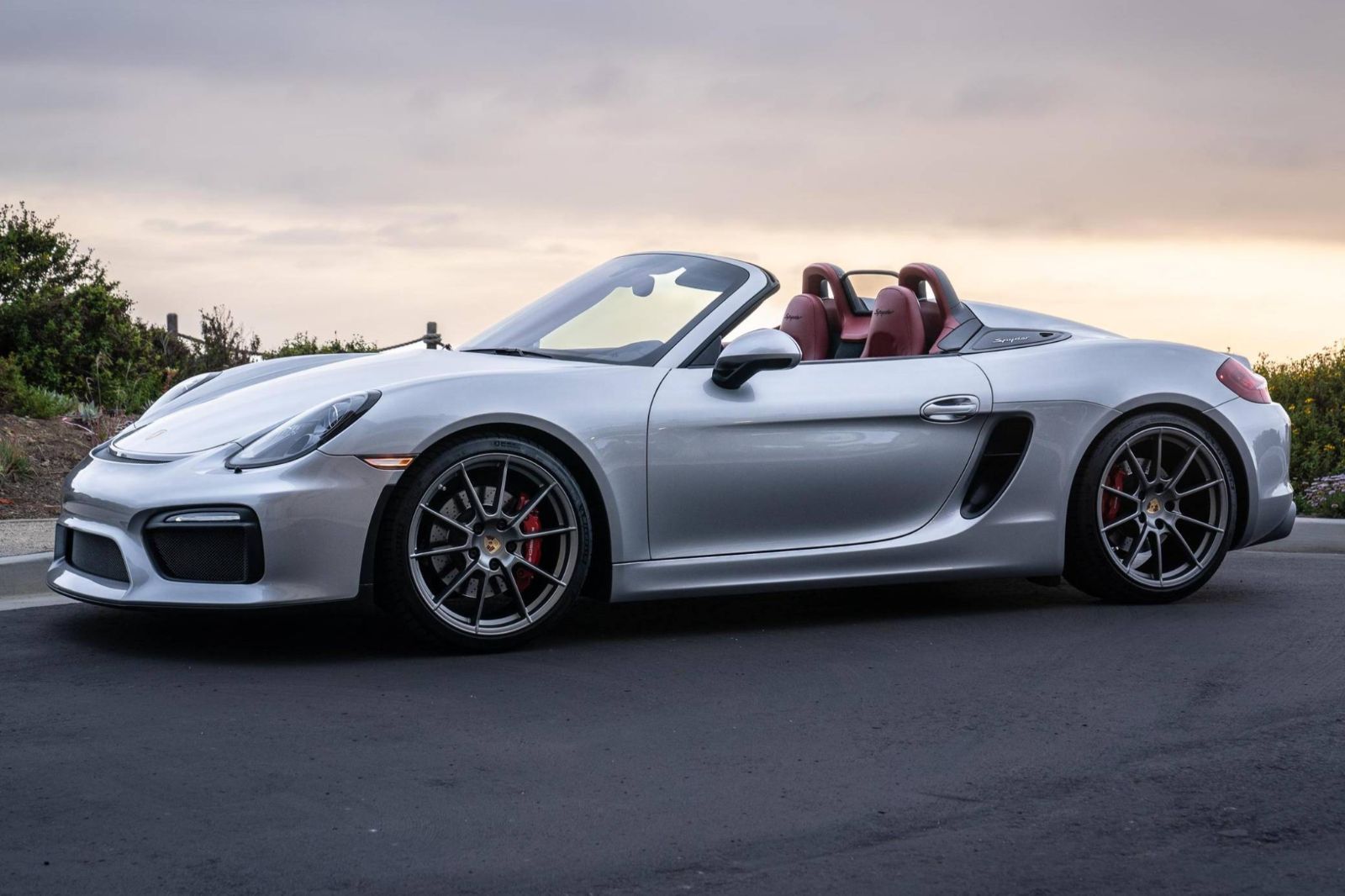
Boxster
The pivot from 'the design Boxster' to 'the handling Boxster.' Body stiffness +40%, wheelbase +60 mm, and electric power steering — fitted to the Boxster before the 911. The 2014 GTS and 2015 Spyder 3.8 NA delivered the final peak of the naturally aspirated six-cylinder Boxster.
- Launch3rd-gen 981 — identity hardens around handlingBody stiffness +40%, wheelbase +60 mm, electric power steering applied to the Boxster before the 911. Base 2.7L 265 PS / 3.4 S 315 PS. Technologies the Boxster received before the 911 — the generation in which the Boxster stopped living in the 911's shadow and claimed an independent identity.Wikipedia (981) ↗
- Milestone981 GTS — the start of a Boxster-specific GTS identityBeyond the +15 PS bump over the S (330 PS), Alcantara interior, standard Sport Chrono and a dedicated SportDesign fascia together defined a Boxster-specific GTS identity. The grade later rolled out across the 911 GTS and Cayman GTS — but the Boxster drew the template first.Car Magazine ↗
- Milestone981 Spyder — the final peak of the NA flat-six BoxsterNew York Auto Show debut, April 2015. Same 3.8L flat-six naturally aspirated 375 PS as the 911 Carrera S, six-speed manual only. 1,315 kg, plus the GT steering wheel from the 911 GT3 and the Cayman GT4's LSD — the purest driver's Boxster ever, and the farewell to the naturally aspirated six-cylinder Boxster. 2,486 units built.Wikipedia (981) ↗
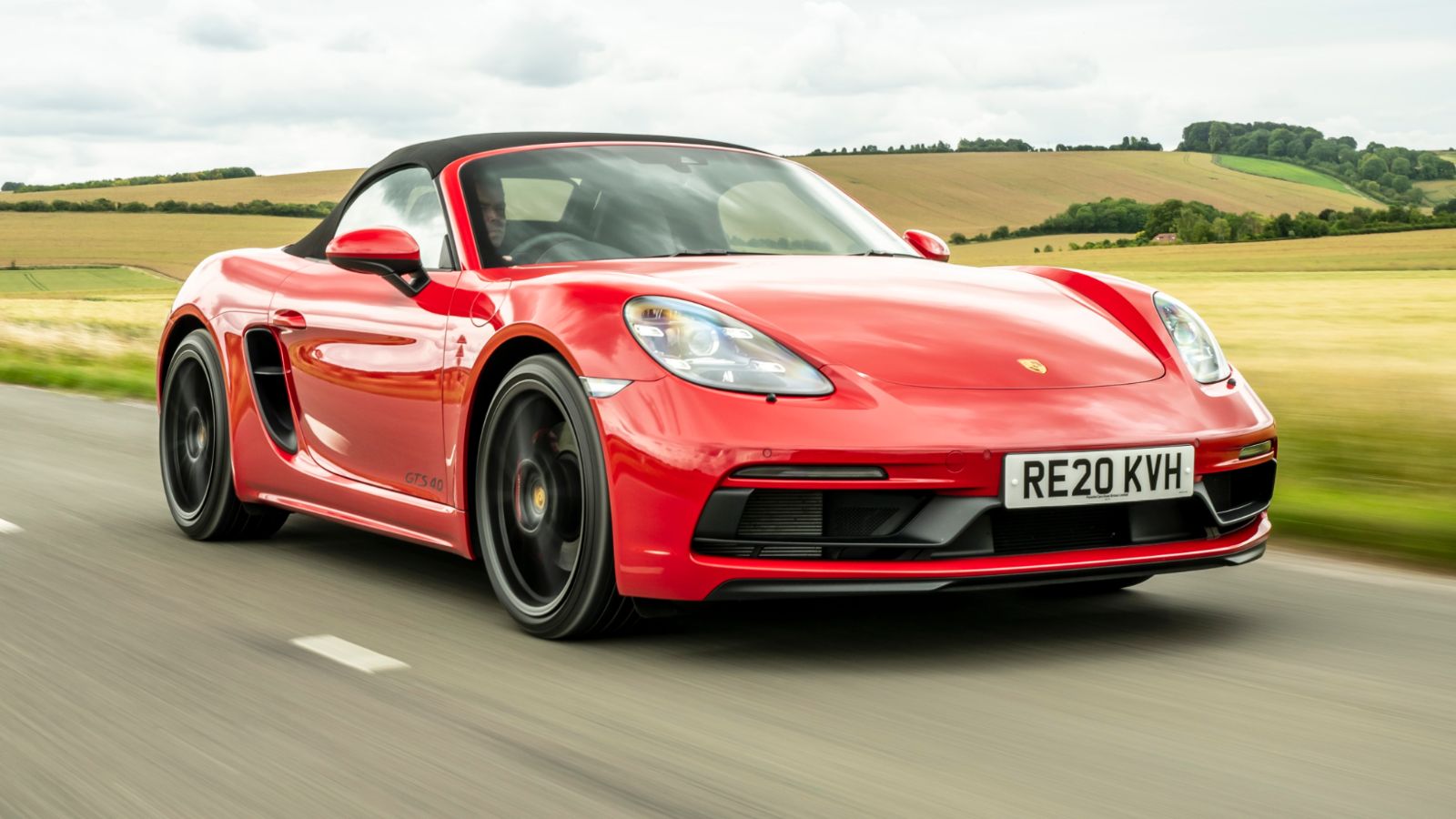
718 Boxster
Resurrected the name of the 718 RSK that won Targa Florio in 1959 and 1960 — sixty years on, with a turbo flat-four. The backlash over the four-cylinder soundtrack pulled the naturally aspirated 4.0L flat-six back via the 2019 Spyder/GT4, then the 2020 GTS 4.0: a rare case of the market actually reversing a lineup decision. 2025 marks the end of petrol Boxster.
- Launch4th-gen 982 / 718 rebrand — a 60-year homecomingResurrected the name of the 718 RSK that won Targa Florio in 1959 and 1960. Switched to flat-four turbos, breaking the 25-year 'Boxster = six-cylinder' formula. 2.0L 300 PS / 2.5L S 350 PS. Acceleration and handling progressed, but the soundtrack debate started here.Wikipedia (982) ↗
- Milestone718 GTS (2.5T 365 PS) — the apex of the four-cylinder turbo eraAnnounced October 2017. The peak of the four-cylinder turbo lineup, 0–60 mph in 4.1 seconds. But critic complaints that 'the soundtrack cheapens the Boxster experience' reached a peak too — the watershed of accumulated pressure for change.Wikipedia (982) ↗
- Milestone718 Cayman GT4 Clubsport — the platform enters the trackRevealed January 2019, just before the Daytona 24 Hours. 3.8L NA 425 PS, six-speed PDK, front suspension from the 911 GT3 Cup, natural-fibre carbon body and a roll cage. Offered in Competition and Trackday trims — the moment the Boxster/Cayman platform officially entered motorsport-only territory.Wikipedia (982) ↗
- Milestone718 Spyder + Cayman GT4 — the six-cylinder returnsJune 2019 announcement, answering the fan-base's plea: the naturally aspirated flat-six was back. 4.0L NA 420 PS based on the 992 Carrera's 9A2EVO engine — the most powerful naturally aspirated Boxster ever. Six-speed manual only at launch — 'a Boxster offered to the purists.'Car and Driver ↗
- F/L718 GTS 4.0 — the market reverses the lineupThe Spyder/GT4's 4.0L NA flat-six expanded into the GTS. 400 PS, the same engine as the Cayman GT4 detuned — a rare case of customer pushback against four-cylinders rolling all the way back into the regular lineup. The model that finally closed the soundtrack debate.Motor1 ↗
- MilestoneGT4 / Spyder / GTS 4.0 PDK — the last concession to puristsFrom the 2021 model year, PDK dual-clutch joined as an option. 0–60 mph dropped from 4.3 to 3.7 seconds. Adding an automatic to the formerly manual-only six-cylinder 4.0L lineup — the final compromise between manual-purist and daily-driver buyers.Motor1 ↗
- Milestone718 Spyder RS — the maddest BoxsterIn 2024 Porsche dropped the 911 GT3's 4.0L NA 500 PS, 9,000 rpm engine into a Boxster. PDK only, 0–100 km/h in 3.4 seconds — the most powerful Boxster ever and the closing peak of the line. With chassis tuning lifted from the 911 GT3 RS, 'effectively a mid-engine 911 GT3.'Wikipedia (982) ↗
- DiscontinuedEnd of the petrol Boxster eraAfter 29 years from September 1996, the last petrol mid-engine Boxster roadster left the Stuttgart line in October 2025. The successor will be electric — the Boxster's mid-engine spirit changes its motor and moves into the next chapter. A farewell to one era, the start of another.CarBuzz ↗
Full Evolution
- Milestone
Design selected — Grant Larson's proposal wins the four-way pitch
June 1992: Grant Larson and Pinky Lai's proposal won approval from design director Harm Lagaay, beating three competing concepts from the dual-development team for the 911 (996) and Boxster (986). The brief — translating the proportions of the 356 Cabriolet, 356 Speedster and 550 Spyder into a modern shell — was locked in here.
- Milestone
Boxster Concept debuts
January 1993, Detroit Auto Show. At a moment when nobody was sure the 911 would survive, this was Porsche's answer. Grant Larson and Pinky Lai imported the soul of the 356 Cabriolet and 550 Spyder, with design director Harm Lagaay signing off — the watershed for the production decision.
- Milestone986
Pilot production begins in Stuttgart
Pilot production at the Zuffenhausen plant in late 1995, just before full-volume production took off in mid-1996. The result of two and a half years of design freeze and 968-bodied prototype testing after the 1993 concept reveal.
- Launch986
1st-gen 986 launch — the car that saved a company
Paris Auto Show debut, September 1996. A mid-engine roadster built down to a price by sharing parts with the 996 Carrera. M96 2.5L flat-six naturally aspirated, 204 PS, 5-speed manual or Tiptronic. 8,000 units in the first year flipped Porsche back into the black — the payoff of swallowing pride and accepting Toyota consulting plus shared parts.
- Milestone
First official Korea imports
Before Porsche Korea existed, the Boxster was among the first officially imported Porsches in Korea. The starting line for 25 years of Boxster history in Korea — a story that began in the 911's shadow.
- Recall986
M96 cracked-liner crisis — casting process redesigned
Early M96 engines suffered porous engine blocks and cracked or slipping cylinder liners. Porsche's fix bored out the defective liners and pressed in new ones, while a redesigned casting process from late 1999 solved the problem at source. The Boxster's first reliability crisis, and its resolution.
- F/L986
986 mid-cycle — the lineup finds its shape
Base engine grew 2.5 → 2.7L (220 PS), Boxster S added with a 3.2L (250 PS). The price gap to the 911 Carrera narrowed and the Boxster expanded from a single car into a proper lineup. The 'entry Porsche' positioning settled into Korean buyers' minds at this point too.
- F/L986
986 facelift — pillar of the company
Refined styling and modest output bumps (2.7 → 225 PS, S → 258 PS). The Boxster was now a load-bearing part of Porsche's P&L — the 'Boxster saves the 911' role hardened into doctrine.
- Milestone
Cayenne arrives — Boxster yields the best-seller crown
When the Cayenne launched in 2003, the Boxster surrendered the seven-year-running Porsche best-seller title to an SUV. From 'the car that saved the company' to 'one strut among many' — the inflection point that redefined the Boxster's role.
- Milestone986
550 Spyder Special Edition — channelling Le Mans
Tribute to the 50th anniversary of the 1953 550 Spyder. 1,953 units, GT Silver Metallic monotone with cocoa-brown leather. The first limited-edition Boxster to declare itself an heir to Porsche motorsport heritage rather than just an entry model.
- Launch987
2nd-gen 987 — promoted to a serious sports car
The generation in which the Boxster jumped from 'design exercise' to 'serious sports car.' Inheriting Carrera GT-style headlamps lifted its visual class. Base 2.7L 240 PS / 3.2 S 280 PS. Nineteen-inch wheels were offered for the first time on a Boxster.
- Milestone987
Cayman joins — one platform, two bodies
Nine months after the 987 Boxster, the Cayman (project 987c) — a fastback coupe sharing the mid-engine platform and many parts — joined the lineup. Doors, headlamps, front fenders and most of the interior were shared, expanding the Boxster's mid-engine spirit from 'a single roadster' to 'a roadster-plus-coupe family.'
- F/L987
987 mid-cycle — equalised with Cayman S output
Base 2.7 → 245 PS (VarioCam Plus added). The S replaced the 3.2L wholesale with a 3.4L for 295 PS — the same output as the Cayman S. Less a facelift than an engine-generation swap.
- Milestone987
RS60 Spyder — motorsport heritage carried into the Boxster
Tribute to the 1960 12 Hours of Sebring victory. 1,960 units, GT Silver paint with Carrera Red leather. 19-inch SportDesign wheels, Active Suspension Management and a sport exhaust pushed output to 303 PS. The second limited-edition Boxster to inherit Porsche motorsport heritage.
- F/L987
987 facelift — a new engine ends the M96 era
Base 2.7 → 2.9L 255 PS. The S adopted direct injection (DFI) on the 3.4L for 295 → 310 PS. The PDK 7-speed dual-clutch went into a Boxster for the first time — gearbox and combustion chamber leapt to the next generation simultaneously. The end of the M96/M97 naturally aspirated era.
- Milestone987
Boxster Spyder — the purest expression
The lightest Porsche of its day at 1,275 kg. Aluminium doors, manual canvas top, no AC or audio, carbon bucket seats. 320 PS with a six-speed manual standard, PDK optional. 'The Boxster reduced to the act of driving itself.'
- Launch981
3rd-gen 981 — identity hardens around handling
Body stiffness +40%, wheelbase +60 mm, electric power steering applied to the Boxster before the 911. Base 2.7L 265 PS / 3.4 S 315 PS. Technologies the Boxster received before the 911 — the generation in which the Boxster stopped living in the 911's shadow and claimed an independent identity.
- Milestone981
981 GTS — the start of a Boxster-specific GTS identity
Beyond the +15 PS bump over the S (330 PS), Alcantara interior, standard Sport Chrono and a dedicated SportDesign fascia together defined a Boxster-specific GTS identity. The grade later rolled out across the 911 GTS and Cayman GTS — but the Boxster drew the template first.
- Milestone981
981 Spyder — the final peak of the NA flat-six Boxster
New York Auto Show debut, April 2015. Same 3.8L flat-six naturally aspirated 375 PS as the 911 Carrera S, six-speed manual only. 1,315 kg, plus the GT steering wheel from the 911 GT3 and the Cayman GT4's LSD — the purest driver's Boxster ever, and the farewell to the naturally aspirated six-cylinder Boxster. 2,486 units built.
- Launch982
4th-gen 982 / 718 rebrand — a 60-year homecoming
Resurrected the name of the 718 RSK that won Targa Florio in 1959 and 1960. Switched to flat-four turbos, breaking the 25-year 'Boxster = six-cylinder' formula. 2.0L 300 PS / 2.5L S 350 PS. Acceleration and handling progressed, but the soundtrack debate started here.
- Milestone982
718 GTS (2.5T 365 PS) — the apex of the four-cylinder turbo era
Announced October 2017. The peak of the four-cylinder turbo lineup, 0–60 mph in 4.1 seconds. But critic complaints that 'the soundtrack cheapens the Boxster experience' reached a peak too — the watershed of accumulated pressure for change.
- Milestone982
718 Cayman GT4 Clubsport — the platform enters the track
Revealed January 2019, just before the Daytona 24 Hours. 3.8L NA 425 PS, six-speed PDK, front suspension from the 911 GT3 Cup, natural-fibre carbon body and a roll cage. Offered in Competition and Trackday trims — the moment the Boxster/Cayman platform officially entered motorsport-only territory.
- Milestone982
718 Spyder + Cayman GT4 — the six-cylinder returns
June 2019 announcement, answering the fan-base's plea: the naturally aspirated flat-six was back. 4.0L NA 420 PS based on the 992 Carrera's 9A2EVO engine — the most powerful naturally aspirated Boxster ever. Six-speed manual only at launch — 'a Boxster offered to the purists.'
- F/L982
718 GTS 4.0 — the market reverses the lineup
The Spyder/GT4's 4.0L NA flat-six expanded into the GTS. 400 PS, the same engine as the Cayman GT4 detuned — a rare case of customer pushback against four-cylinders rolling all the way back into the regular lineup. The model that finally closed the soundtrack debate.
- Milestone982
GT4 / Spyder / GTS 4.0 PDK — the last concession to purists
From the 2021 model year, PDK dual-clutch joined as an option. 0–60 mph dropped from 4.3 to 3.7 seconds. Adding an automatic to the formerly manual-only six-cylinder 4.0L lineup — the final compromise between manual-purist and daily-driver buyers.
- Milestone982
718 Spyder RS — the maddest Boxster
In 2024 Porsche dropped the 911 GT3's 4.0L NA 500 PS, 9,000 rpm engine into a Boxster. PDK only, 0–100 km/h in 3.4 seconds — the most powerful Boxster ever and the closing peak of the line. With chassis tuning lifted from the 911 GT3 RS, 'effectively a mid-engine 911 GT3.'
- Discontinued982
End of the petrol Boxster era
After 29 years from September 1996, the last petrol mid-engine Boxster roadster left the Stuttgart line in October 2025. The successor will be electric — the Boxster's mid-engine spirit changes its motor and moves into the next chapter. A farewell to one era, the start of another.
Other Heritage
Explore other model histories in this category.