Grandeur
A symbol of success
July 1986. The first-generation Grandeur — the boxy "Gak-Grandeur" — arrived as the Granada's successor. Project YFL, co-developed with the Mitsubishi Debonair, became another word for "success" in 1980s Korea. A single white Grandeur was the picture of arrival.
The turning point — Hyundai's own engineering
In 1998, the third-generation XG broke from Mitsubishi dependency and became the first Grandeur built on Hyundai's own engineering. It carried Hyundai's first in-house large engine, the Delta V6, and exports to the US and Europe began in earnest. The moment the Korean luxury sedan stepped onto the global stage.
The nation's full-size sedan
Five consecutive years as Korea's best-selling passenger car from 2017. The Grandeur was no longer "a successful man's car" but "Korea's family man's car" — the most common car on Korean roads, and still the most desired.
From 1986 to 2026, and onto The new Grandeur
In 2022, the seventh-generation Grandeur (GN7) wore a design that reinterpreted the heritage of the original "Gak-Grandeur". 140,000 units in its first year — the fastest-selling start in the model's history. The nameplate that crossed two million cumulative units returned, in May 2026, with the facelift "The new Grandeur" — once again to where it began. 10,277 first-day contracts, carrying a 17-inch Pleos Connect and Gleo generative AI.
A symbol of success. July 1986. The first-generation Grandeur — the boxy "Gak-Grandeur" — arrived as the Granada's successor. Project YFL, co-developed with the Mitsubishi Debonair, became another word for "success" in 1980s Korea. A single white Grandeur was the picture of arrival. The turning point — Hyundai's own engineering. In 1998, the third-generation XG broke from Mitsubishi dependency and became the first Grandeur built on Hyundai's own engineering. It carried Hyundai's first in-house large engine, the Delta V6, and exports to the US and Europe began in earnest. The moment the Korean luxury sedan stepped onto the global stage. The nation's full-size sedan. Five consecutive years as Korea's best-selling passenger car from 2017. The Grandeur was no longer "a successful man's car" but "Korea's family man's car" — the most common car on Korean roads, and still the most desired. From 1986 to 2026, and onto The new Grandeur. In 2022, the seventh-generation Grandeur (GN7) wore a design that reinterpreted the heritage of the original "Gak-Grandeur". 140,000 units in its first year — the fastest-selling start in the model's history. The nameplate that crossed two million cumulative units returned, in May 2026, with the facelift "The new Grandeur" — once again to where it began. 10,277 first-day contracts, carrying a 17-inch Pleos Connect and Gleo generative AI.
Grandeur
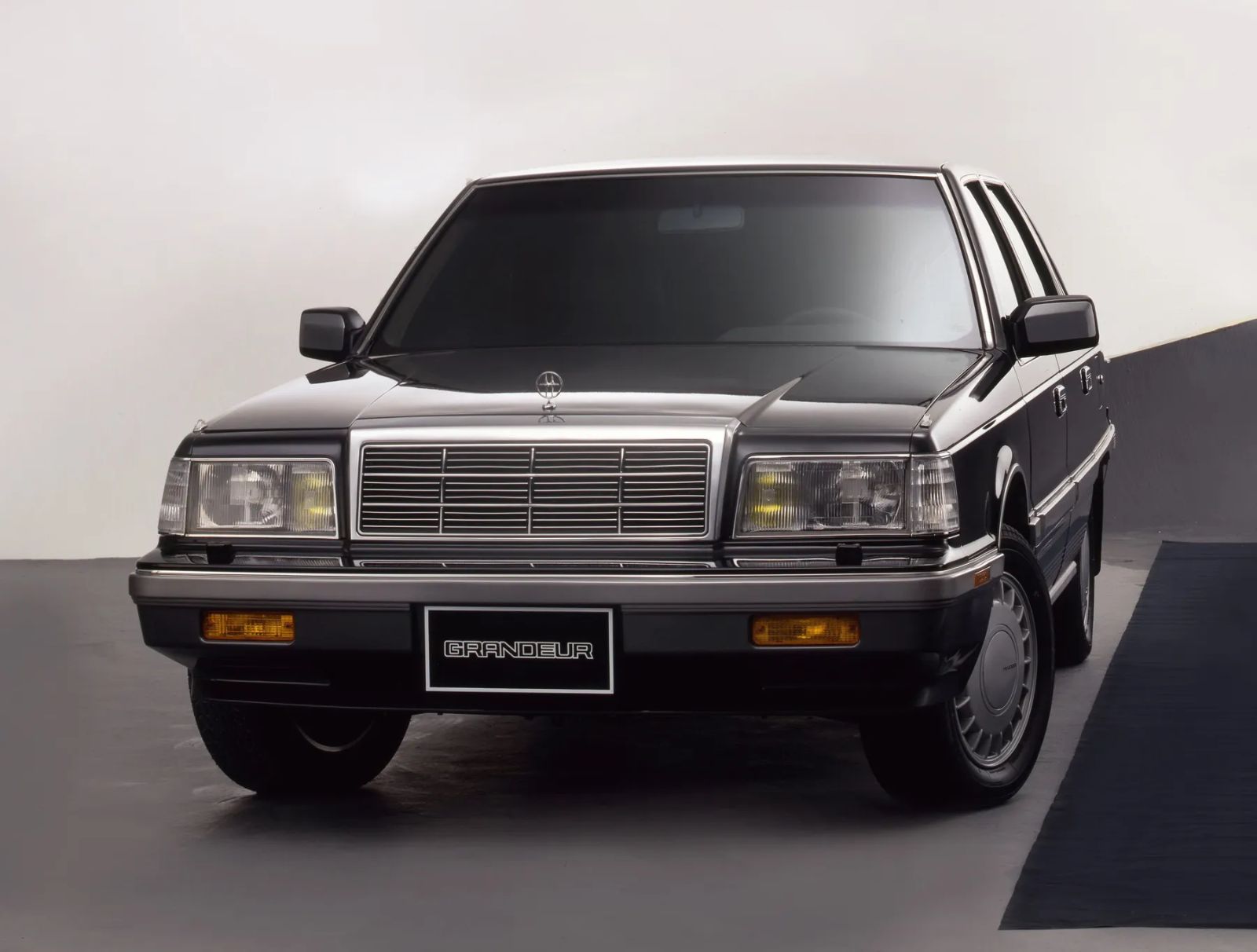
1st gen (1986–1992, 'Gak-Grandeur' / 'boxy Grandeur'). Co-developed with the Mitsubishi Debonair as project YFL. The angular, straight-edged design became another word for 'success' in 1980s Korea — a single white Gak-Grandeur in a driveway told the whole story. With the Sirius 2.0 I4, Cyclone V6 3.0L, and a sticker price close to a Gangnam apartment, it defined Korea's first proper luxury sedan.
- Launch1st-gen Grandeur (L) launch — the word 'flagship' arrives in KoreaCo-developed with Mitsubishi (project YFL) as the Granada's successor. Launched with a Sirius 2.0L I4 and Cyclone V6 3.0L. Sold in Korea as the 'Grandeur' and exported as the 'Debonair V' to Japan and other markets. At a launch price near KRW 15 million — comparable to a Gangnam apartment of the era — it defined Korea's first proper luxury sedan.Hyundai Motor Official ↗
Grandeur
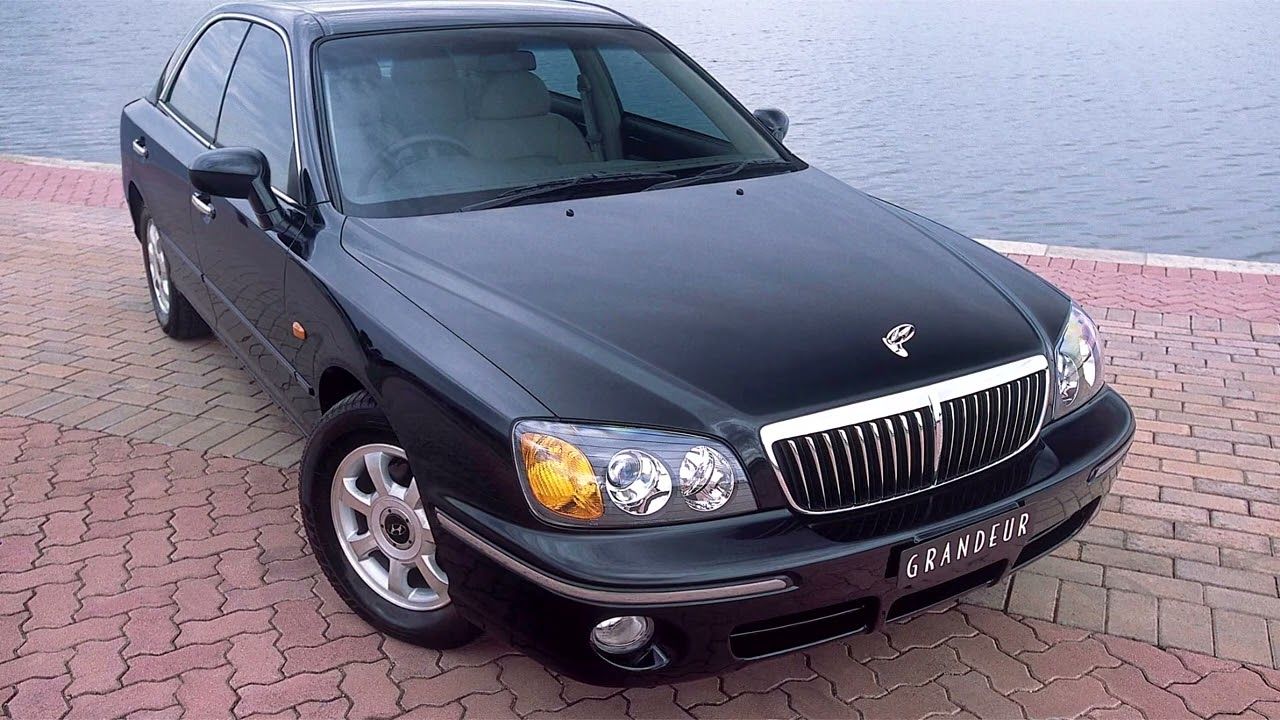
2nd gen (1992–1998, 'New Grandeur'). The last Grandeur built in partnership with Mitsubishi. Lineup expanded to Cyclone V6 3.0 DOHC 205 PS and 3.5 DOHC 225 PS. The 1996 facelift was spun off as the standalone 'Dynasty,' positioned above the Grandeur — a Korean luxury sedan that lived 13 years on a single facelift, an unusually long run.
- Launch2nd-gen New Grandeur (LX) launch — the car that lived 13 yearsLaunched with the New Sirius 2.0L I4 and Cyclone V6 3.0L — the last Grandeur of the Mitsubishi partnership era. With just one facelift (the 1996 Dynasty), it ran for thirteen years. Right as Korean cars were entering their own design era, the Grandeur still couldn't shake the 'Japanese car with a Korean badge' tag.Hyundai Motor Official ↗
- MilestoneDynasty splits off — owner-driven luxury above the GrandeurThe LX facelift, upgraded with wood-grain trim and premium leather, was spun off as the standalone Dynasty, positioned above the Grandeur. It became the precursor to the 1999 Equus — a Korean standardisation of the 'chairman's car.' The first time luxury was carved out of the Grandeur as a separate offering.Wikipedia KR (Dynasty) ↗
Grandeur
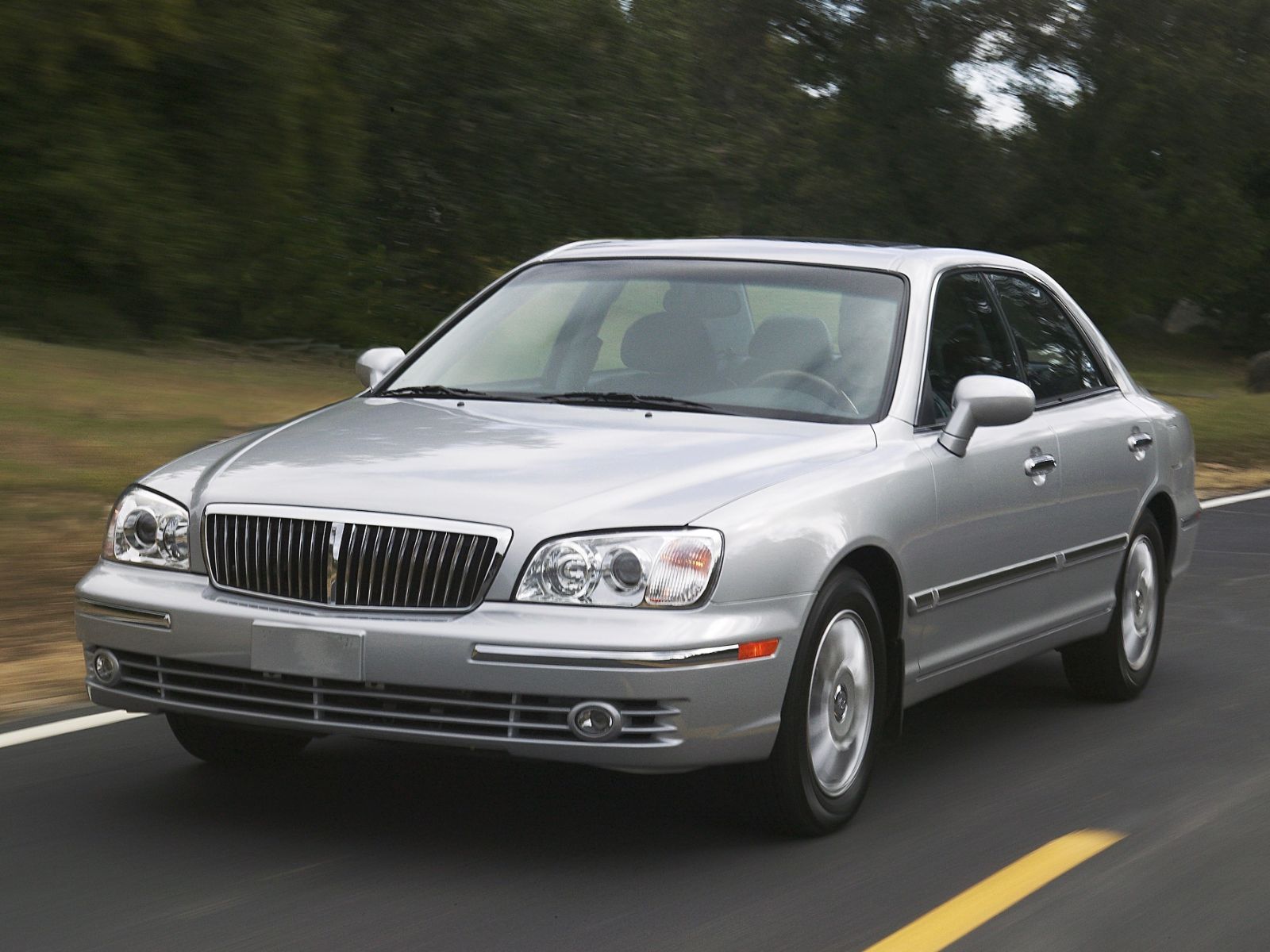
3rd gen (1998–2005, XG). The first Grandeur Hyundai built without Mitsubishi, on its own engineering. Powered by Hyundai's first in-house large V6s, the 'Delta' and 'Sigma.' Exported in earnest as the 'XG350' in the U.S. and the 'Azera' in Europe — the moment a Korean luxury sedan first stepped onto the global stage.
- Launch3rd-gen Grandeur (XG) launch — the first Grandeur built without MitsubishiThe first Grandeur Hyundai built on its own engineering. Powered by Hyundai's first in-house large V6s — the 'Delta' and 'Sigma.' Exported in earnest as the 'XG350' in the U.S. and the 'Azera' in Europe. In the immediate aftermath of the IMF crisis, 'a big car built with our own technology' carried real pride — answered with 310,000 units sold.Hyundai Motor Official ↗
Grandeur
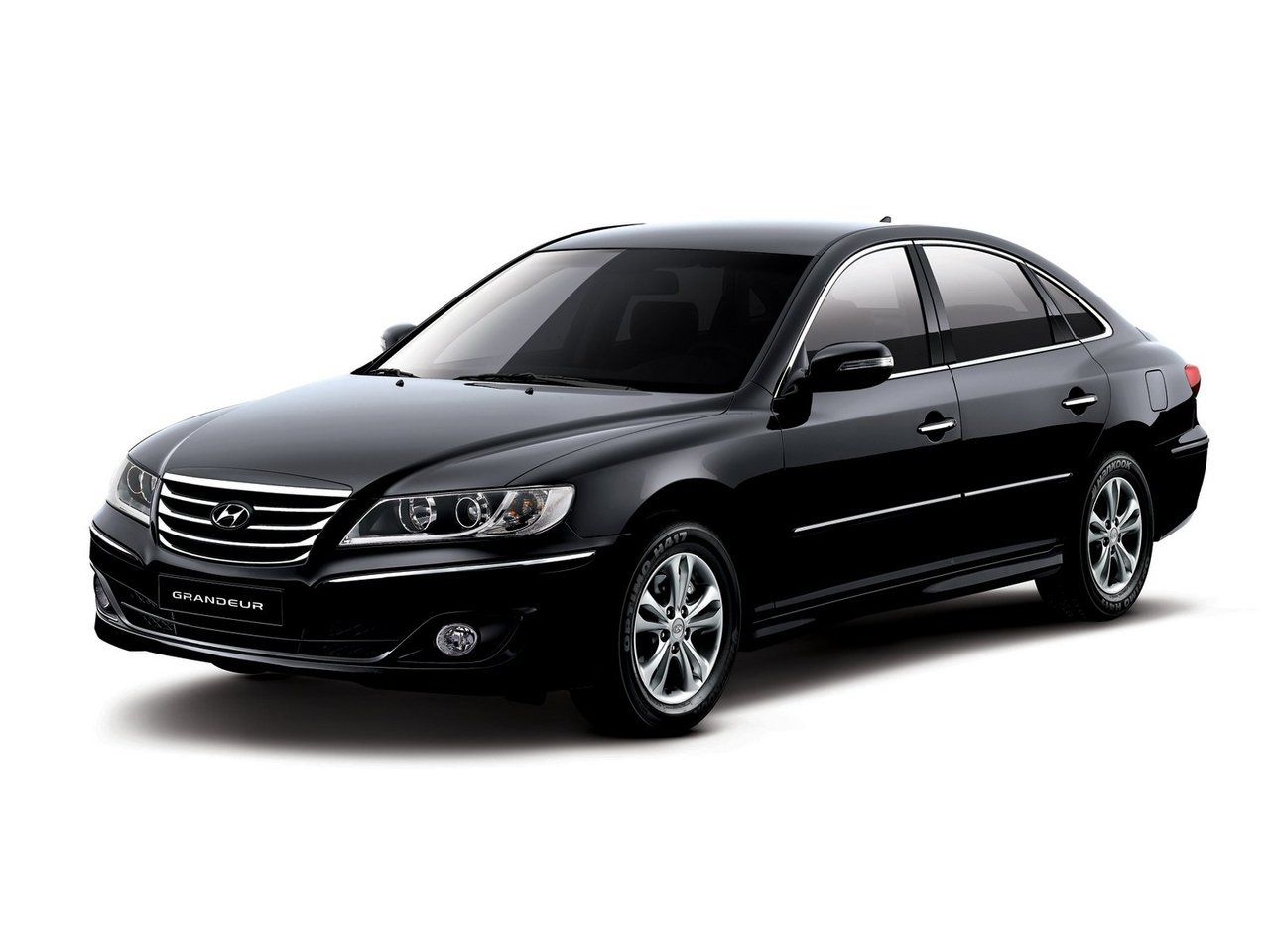
4th gen (2005–2011, TG). Launched off the second-largest pre-order book in Korean history. The body grew into proper D-segment dimensions — V6 2.7/3.3 with a 3.8L V6, Korea's first. Two facelifts (New Luxury / The Luxury) stretched the cycle to six years and 400,000 cumulative sales. The generation that locked in the Grandeur's design identity.
- Launch4th-gen Grandeur (TG) launch — second-largest pre-order book in Korean historyBody grew into proper D-segment dimensions. V6 2.7L, V6 3.3L, and Korea's first V6 3.8L. The generation that defined the Grandeur's design identity — six years on the line, 400,000 cumulative sales. The point at which the Grandeur became 'the Korean dad's car.'Hyundai Motor Official ↗
- F/LTG New Luxury — refreshed inside, not outsideAlmost no exterior change, but a substantial interior trim and equipment overhaul. Revised fabric/wood/leather combinations and refreshed seat designs. Quick mid-cycle housekeeping that kept the sales curve intact — the middle breath of the 4th generation.Wikipedia KR (Grandeur) ↗
- F/LTG The Luxury — proper facelift, four years inComprehensive bumper, grille and rear-end restyle. Larger navigation screen, standard rear-view camera. One year before the HG arrived — a final leap right as the cycle was winding down. The decisive move that stretched the 4th generation a little further.Wikipedia KR (Grandeur) ↗
Grandeur
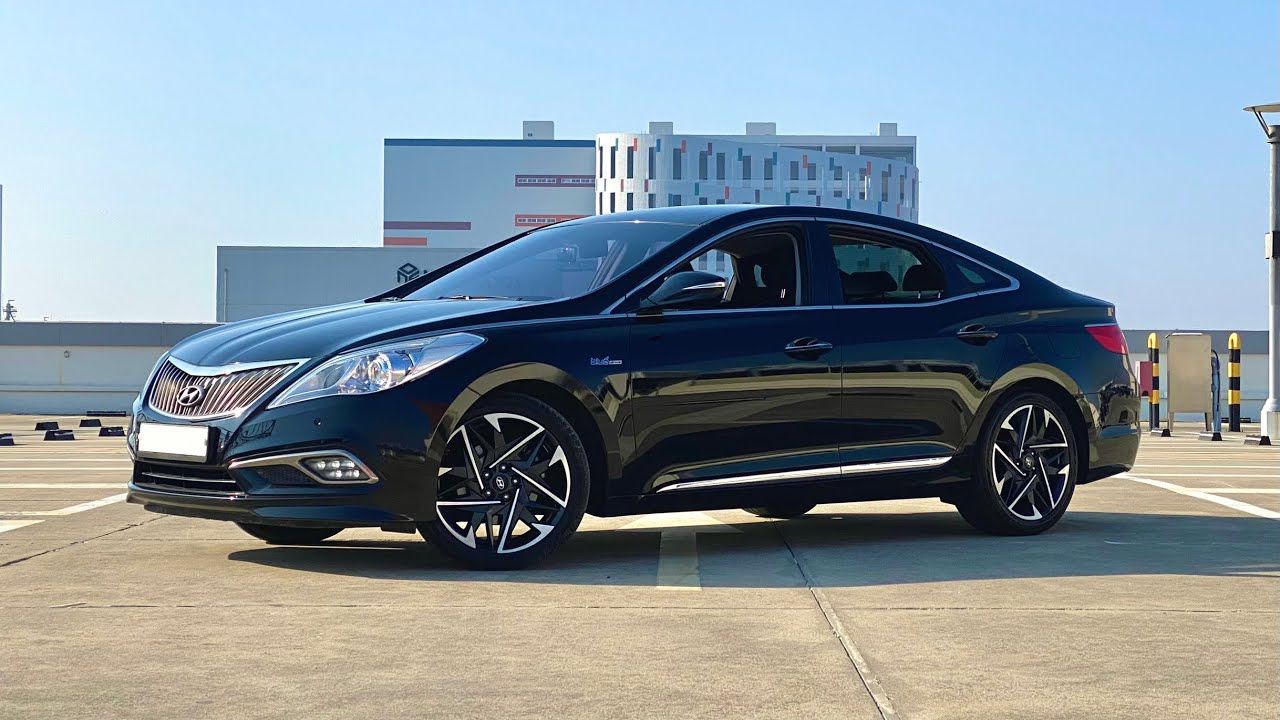
5th gen (2011–2016, HG). 510,000 units sold — the best-selling Grandeur generation ever. The Alcantara package redefined what 'Grandeur Luxury' meant; side and curtain airbags plus VDC went standard across the petrol lineup. The 2013 Grandeur Hybrid (2.4 Theta II + 35 kW) joined as Korea's first volume electrified large sedan — the start of executive-class electrification here.
- Launch5th-gen HG launch — 510,000 units, the best-selling Grandeur generation everThe Alcantara package — offered as an option — redefined what 'Grandeur Luxury' meant. Side and curtain airbags and Vehicle Dynamic Control (VDC) went standard across the petrol lineup. Cumulative sales of 510,000 — the best-selling Grandeur generation ever. The most common car on Korean roads through the 2010s.Hyundai Motor Official ↗
- LaunchHG Celebrity — testing how far up-market the Grandeur could goA standalone variant of the V6 3.3L model, the 'Grandeur Celebrity HG330,' targeted the slot just below the Equus. Two years later it was absorbed into the new Genesis brand — short-lived. The last attempt to layer additional luxury on top of the Grandeur itself.Wikipedia KR (Grandeur HG) ↗
- MilestoneFirst Grandeur Hybrid — the start of executive-class electrificationA hybrid powertrain joined the 5th-gen HG for the first time. 2.4L Theta II + 35 kW motor, combined fuel economy 16.0 km/L. The moment a Korean executive sedan hybrid started selling in meaningful numbers — the foundation stone of the Grandeur's electrified lineup.Hyundai Motor Official ↗
Grandeur
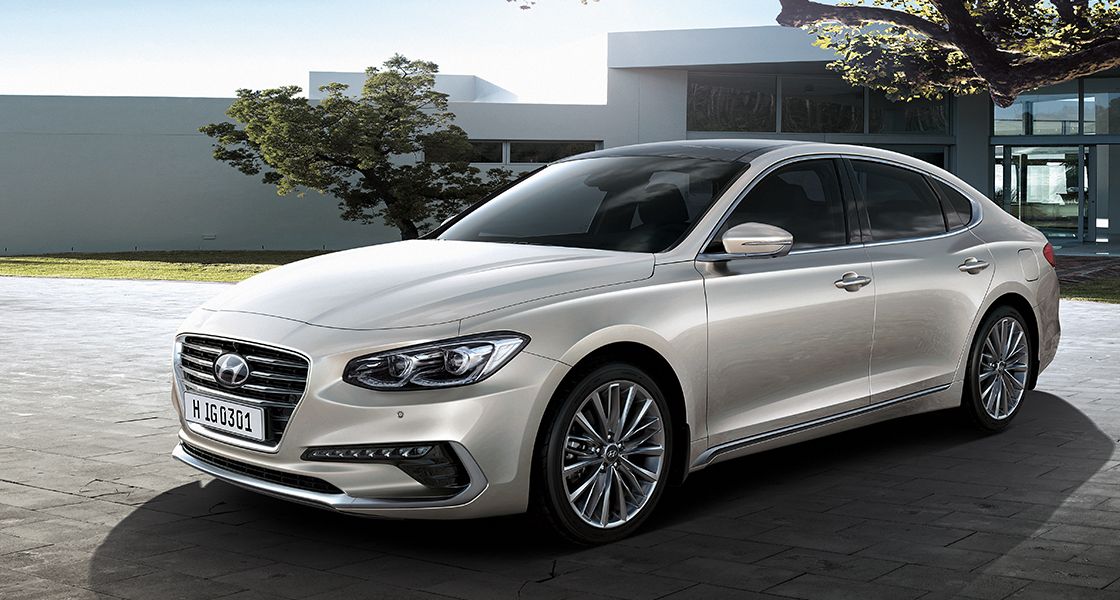
6th gen (2016–2022, IG). Korea's best-selling passenger car five years running, 2017–2021 — completing the 'people's large sedan' arc. 8-speed automatic, Smart Cruise Control and Lane Keeping Assist became standard. The 2019 facelift ('The New Grandeur') was a near full-model-change visually, with the horizontal LED 'Parametric Jewel' grille and a 40 mm wheelbase stretch.
- Launch6th-gen IG launch — the 'people's large sedan' completedComprehensive design overhaul. Standard 8-speed automatic and advanced driver-assistance (Smart Cruise Control, Lane Keeping Assist). Korea's best-selling passenger car five years running, 2017–2021 — locking in its place as the people's large sedan. The Grandeur was no longer special — it had become the car everybody owned.Hyundai Motor Official ↗
- MilestoneIG hybrid lineup added — hybrid is no longer an experimentThe 6th-generation IG added a hybrid model, normalising electrification within the lineup. 2.4L + 38 kW motor, combined 16.2 km/L. The point at which the 'Grandeur Hybrid' was no longer an enthusiast pick but a mainstream option.Hyundai Motor Official ↗
- F/LThe New Grandeur (IG facelift) — a facelift that beat a full model changeLength +60 mm, wheelbase +40 mm. Gear selector switched from a boot-style mechanical lever to electronic buttons. The horizontal-bar grille and LED 'Parametric Jewel' design split opinion, but in 2020 alone the Grandeur sold 145,000 units — a single-year all-time high. 'The facelift that beat a full model change.'Hyundai Motor Official ↗
Grandeur
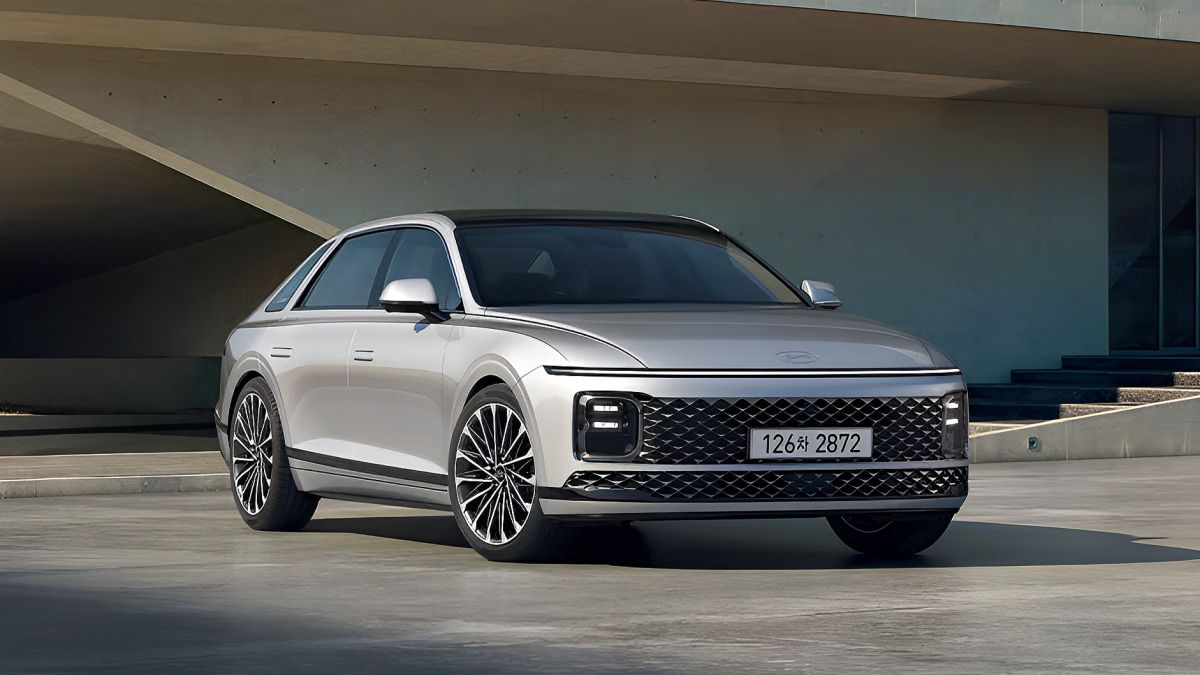
7th generation early model (2022–2026, GN7). Design reinterpreting the original 1st-gen "Gak-Grandeur" heritage. Full lineup of gasoline 2.5 / LPG 3.5 / hybrid, starting at 37.16M KRW. 140,000 units in the first year — the fastest-selling Grandeur ever. The generation that crossed the 2-million cumulative mark and held Korea's #1 passenger-car position for four straight years until the facelift.
- Launch7th-gen The All-New Grandeur (GN7) launch — the 7th-gen returns to the 1stA modern reinterpretation of the original Gak-Grandeur heritage. Full lineup — petrol 2.5 / LPG 3.5 / Hybrid — from KRW 37.16 million. 140,000 sold within a year, the fastest sales pace any Grandeur has ever managed. 36 years on, the 'symbol of success' came full circle and became the 'symbol of success' again.Hyundai Motor Official ↗
Grandeur
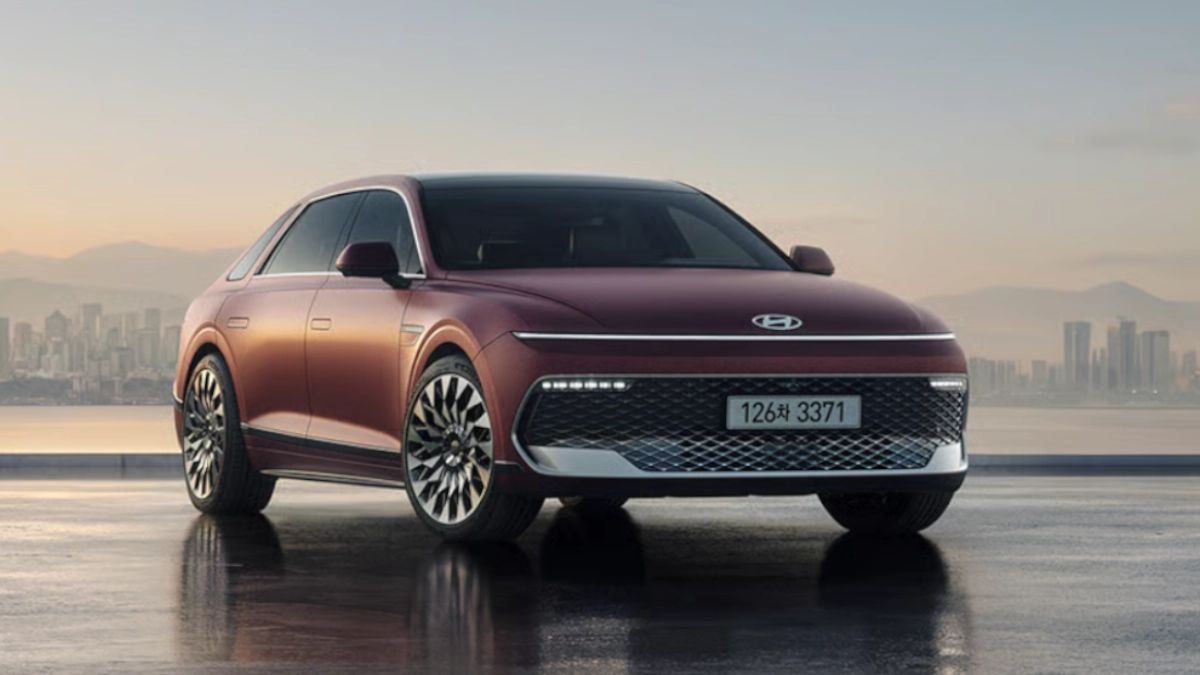
7th generation late model (2026–, current, GN7 facelift). Launched May 14, 2026 as "The new Grandeur". Shark-nose face + MLA headlamps + 17-inch Pleos Connect AAOS + Gleo generative AI + Smart Vision Roof + motorized vents — a near-new-car overhaul. First hybrid sedan to offer 2nd-row reclining + ventilated seats with TMED-II 2nd-gen. Length stretched to 5,050mm, matching the K8. 10,277 first-day contracts — the 2nd-highest in Grandeur history.
Full Evolution
- LaunchL
1st-gen Grandeur (L) launch — the word 'flagship' arrives in Korea
Co-developed with Mitsubishi (project YFL) as the Granada's successor. Launched with a Sirius 2.0L I4 and Cyclone V6 3.0L. Sold in Korea as the 'Grandeur' and exported as the 'Debonair V' to Japan and other markets. At a launch price near KRW 15 million — comparable to a Gangnam apartment of the era — it defined Korea's first proper luxury sedan.
- LaunchLX
2nd-gen New Grandeur (LX) launch — the car that lived 13 years
Launched with the New Sirius 2.0L I4 and Cyclone V6 3.0L — the last Grandeur of the Mitsubishi partnership era. With just one facelift (the 1996 Dynasty), it ran for thirteen years. Right as Korean cars were entering their own design era, the Grandeur still couldn't shake the 'Japanese car with a Korean badge' tag.
- MilestoneLX
Dynasty splits off — owner-driven luxury above the Grandeur
The LX facelift, upgraded with wood-grain trim and premium leather, was spun off as the standalone Dynasty, positioned above the Grandeur. It became the precursor to the 1999 Equus — a Korean standardisation of the 'chairman's car.' The first time luxury was carved out of the Grandeur as a separate offering.
- LaunchXG
3rd-gen Grandeur (XG) launch — the first Grandeur built without Mitsubishi
The first Grandeur Hyundai built on its own engineering. Powered by Hyundai's first in-house large V6s — the 'Delta' and 'Sigma.' Exported in earnest as the 'XG350' in the U.S. and the 'Azera' in Europe. In the immediate aftermath of the IMF crisis, 'a big car built with our own technology' carried real pride — answered with 310,000 units sold.
- LaunchTG
4th-gen Grandeur (TG) launch — second-largest pre-order book in Korean history
Body grew into proper D-segment dimensions. V6 2.7L, V6 3.3L, and Korea's first V6 3.8L. The generation that defined the Grandeur's design identity — six years on the line, 400,000 cumulative sales. The point at which the Grandeur became 'the Korean dad's car.'
- F/LTG
TG New Luxury — refreshed inside, not outside
Almost no exterior change, but a substantial interior trim and equipment overhaul. Revised fabric/wood/leather combinations and refreshed seat designs. Quick mid-cycle housekeeping that kept the sales curve intact — the middle breath of the 4th generation.
- F/LTG
TG The Luxury — proper facelift, four years in
Comprehensive bumper, grille and rear-end restyle. Larger navigation screen, standard rear-view camera. One year before the HG arrived — a final leap right as the cycle was winding down. The decisive move that stretched the 4th generation a little further.
- LaunchHG
5th-gen HG launch — 510,000 units, the best-selling Grandeur generation ever
The Alcantara package — offered as an option — redefined what 'Grandeur Luxury' meant. Side and curtain airbags and Vehicle Dynamic Control (VDC) went standard across the petrol lineup. Cumulative sales of 510,000 — the best-selling Grandeur generation ever. The most common car on Korean roads through the 2010s.
- LaunchHG
HG Celebrity — testing how far up-market the Grandeur could go
A standalone variant of the V6 3.3L model, the 'Grandeur Celebrity HG330,' targeted the slot just below the Equus. Two years later it was absorbed into the new Genesis brand — short-lived. The last attempt to layer additional luxury on top of the Grandeur itself.
- MilestoneHG
First Grandeur Hybrid — the start of executive-class electrification
A hybrid powertrain joined the 5th-gen HG for the first time. 2.4L Theta II + 35 kW motor, combined fuel economy 16.0 km/L. The moment a Korean executive sedan hybrid started selling in meaningful numbers — the foundation stone of the Grandeur's electrified lineup.
- LaunchIG
6th-gen IG launch — the 'people's large sedan' completed
Comprehensive design overhaul. Standard 8-speed automatic and advanced driver-assistance (Smart Cruise Control, Lane Keeping Assist). Korea's best-selling passenger car five years running, 2017–2021 — locking in its place as the people's large sedan. The Grandeur was no longer special — it had become the car everybody owned.
- MilestoneIG
IG hybrid lineup added — hybrid is no longer an experiment
The 6th-generation IG added a hybrid model, normalising electrification within the lineup. 2.4L + 38 kW motor, combined 16.2 km/L. The point at which the 'Grandeur Hybrid' was no longer an enthusiast pick but a mainstream option.
- F/LIG
The New Grandeur (IG facelift) — a facelift that beat a full model change
Length +60 mm, wheelbase +40 mm. Gear selector switched from a boot-style mechanical lever to electronic buttons. The horizontal-bar grille and LED 'Parametric Jewel' design split opinion, but in 2020 alone the Grandeur sold 145,000 units — a single-year all-time high. 'The facelift that beat a full model change.'
- Milestone
Domestic cumulative sales pass 2 million — 35 years of weight
35 years after launch in 1986. Generations: 1st 92,000 / 2nd 164,000 / 3rd 311,000 / 4th 406,000 / 5th 515,000 / 6th 509,000 units. The second-ever Korean nameplate to cross 2 million domestic sales (after the Sonata). One model, one generation, then the next — a car carried through a single family.
- Milestone
Heritage Series Grandeur concept revealed — a 35th-anniversary tribute
An EV concept reinterpreting the original 1986 Gak-Grandeur. Boxy proportions preserved but reconstructed with 21st-century technology — burgundy velvet and Nappa leather inside. The second Heritage Series after the Pony — and the design inspiration for the next year's 7th-gen GN7.
- LaunchGN7
7th-gen The All-New Grandeur (GN7) launch — the 7th-gen returns to the 1st
A modern reinterpretation of the original Gak-Grandeur heritage. Full lineup — petrol 2.5 / LPG 3.5 / Hybrid — from KRW 37.16 million. 140,000 sold within a year, the fastest sales pace any Grandeur has ever managed. 36 years on, the 'symbol of success' came full circle and became the 'symbol of success' again.
Other Heritage
Explore other model histories in this category.